Crapo Hill Landfill
The Crapo Hill landfill is an award-winning, fully lined landfill that has provided environmentally responsible and affordable solid waste disposal capacity for the Town of Dartmouth and the City of New Bedford since opening in 1995. It has a landfill gas-to-energy facility on site that produces electrical energy from the decomposing waste- enough to power an estimated 1,700 homes! The District contracts directly with waste haulers serving the member communities and surrounding areas.
REGULAR BUSINESS HOURS:
- MONDAY to FRIDAY 7:15 A.M. TO 3:15 P.M.
- SATURDAY – 8:00 A.M. TO 11:00 A.M. – (CLOSING EXTENDED TO 12:00 P.M. ON SATURDAYS OF HOLIDAY WEEKS)
📢 WEEKLY UPDATE
Week Ending November 21, 2026
The District is currently installing horizontal landfill gas extraction wells during normal operating hours:
Monday-Friday
🕖 7:15 a.m. – 3:15 p.m.During this work, residents may experience temporary odor conditions in the surrounding area.
⚠️ Notice an Odor? Please call the Odor Hotline: (508) 763-2423
Our Mission
Environmental Stewardship
We strive to manage resources responsibly, reduce environmental impacts, and promote sustainable practices that benefit our communities and the environment.
The Greater New Bedford Regional Refuse Management District is committed to providing environmentally responsible, cost-effective solid waste management services for its member communities. Through innovative programs, sustainable landfill operations, and resource recovery initiatives, the District works to protect public health, preserve environmental quality, and serve the needs of the region for generations to come.
Operations
The Greater New Bedford Regional Refuse Management District manages the daily operation and maintenance of the Crapo Hill Landfill, providing safe, reliable, and environmentally responsible solid waste disposal services for its member communities.
Landfill operations are conducted in accordance with all applicable local, state, and federal regulations, with an emphasis on environmental protection, operational efficiency, and long-term sustainability.
Capacity
The Crapo Hill Landfill is designed to provide long-term disposal capacity for the District’s member communities.
Through careful planning, engineering, and site management, the facility maximizes landfill capacity while maintaining compliance with environmental regulations.
Ongoing monitoring and strategic development help ensure the landfill continues to meet regional waste management needs well into the future.
Site History
The Crapo Hill Landfill has served the Greater New Bedford region for decades, evolving from a municipal disposal facility into a modern, engineered landfill focused on environmental stewardship and resource recovery.
Through continued investment in infrastructure, landfill gas recovery systems, environmental monitoring programs, and operational improvements, the District has maintained its commitment to responsible waste management and sustainable practices.
Landfill Gas-To-Energy Facility
Landfill Gas-to-Energy Facility

Gases created by decomposition of waste within the landfill are collected through a system of perforated pipes installed throughout the landfill as it is constructed. The landfill gas is piped to the on-site electric power plant operated by CommonWealth New Bedford Energy, LLC where it is burned in Caterpillar engines to generate up to 3.4 megawatts of electricity. The power is sold to Eversource.
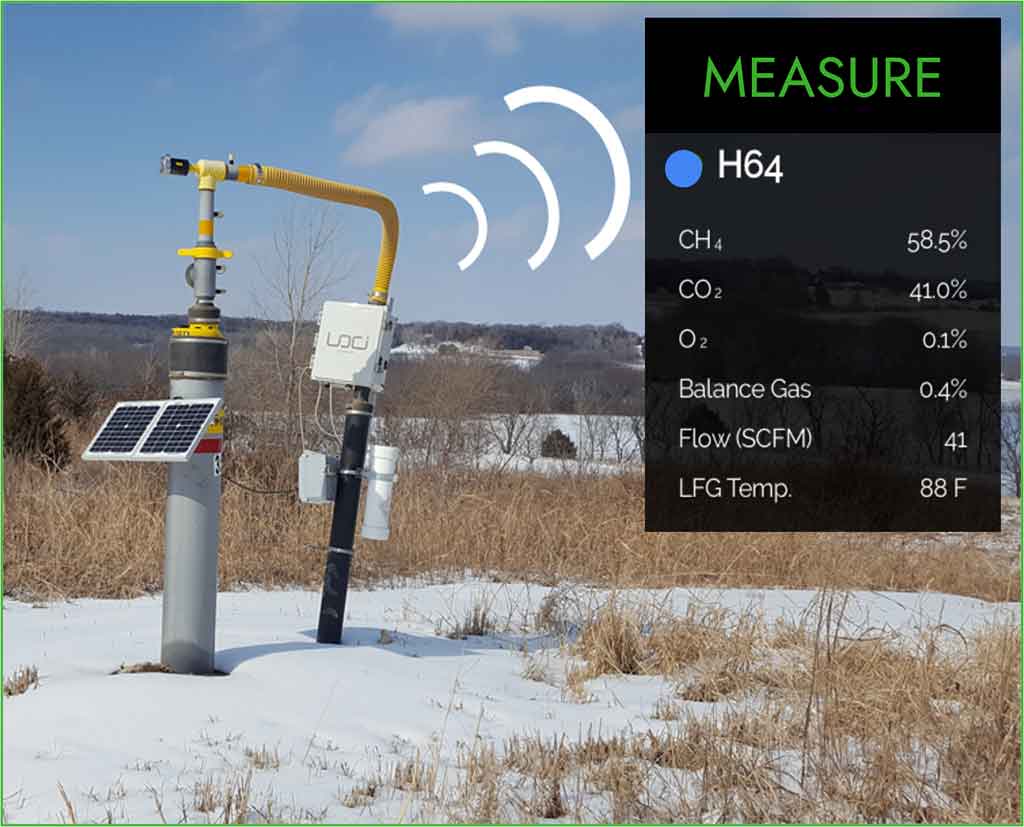
The District uses technology from LoCi Controls to remotely monitor the conditions of the gas wellfield, providing real-time data on gas composition, temperature, pressure, and flow rate. This technology maximizes the collection of gas within the landfill and helps alert the staff if there are areas that need attention or repair, minimizing the potential for fugitive emissions.
Overview of the District
The Greater New Bedford Regional Refuse Management District is a great example of regional cooperation and provides cost-effective, safe, and sustainable municipal solid waste disposal services. The District is a public entity that was formed in 1979 when Dartmouth and New Bedford signed an Inter-Municipal Agreement under Massachusetts General Laws, Chapter 40, Section 44A-K and a special act of the State Legislature. The District is governed by a Committee composed of three members from New Bedford and three members from Dartmouth, whose primary focus is serving the best interest of these communities.
🏆 SWANA Award Recognition
The Greater New Bedford Regional Refuse Management District received the 2010 Gold Landfill Management Excellence Award from the Solid Waste Association of North America (SWANA), recognizing its commitment to excellence in landfill operations and environmental stewardship.
Additionally, the Greater New Bedford Landfill Gas Utilization Project at the Crapo Hill Landfill received the 2010 Silver Landfill Gas Utilization Excellence Award for its innovative approach to recovering and utilizing landfill gas as a renewable energy resource.
Environmental Innovation
The facility also hosts a Hydrogen Sulfide Removal System, which helps mitigate odors and deliver higher-quality landfill gas to the power plant, enhancing both operational efficiency and environmental performance.
Waste Disposal Bans
Materials prohibited from disposal at the Crapo Hill Landfill.
Certain materials that are easy to recycle or are toxic are banned from disposal or transfer for disposal in Massachusetts and should not be sent to the Crapo Hill Landfill, including:
Additional Information
For more information, visit
Massachusetts Waste Disposal Bans
.
Odor Management
One of the District’s goals is to be a good neighbor by limiting impacts on those who live and work closest to the landfill. Learn more about how odors are reported, investigated, and managed.
+ How to Report an Odor
When calling, please:
- Describe the intensity of the odor on a scale of 1 to 5, with 5 being the most intense.
- Provide the address or specific location where the odor is detected.
- Describe the odor as best you can (trash smell, gas, rotten eggs).
- If you would like a call back, provide a telephone number where a District representative can reach you.
+ Understanding Landfill Odors
+ Odor Reduction Practices
- Collect landfill gas through a network of wells and send it to the on-site gas-to-energy facility.
- Monitor landfill areas that are not under the influence of the gas collection system.
- Use candlestick flares to burn landfill gas and reduce odor potential.
- Minimize the size of the active disposal area.
- Apply daily cover material over waste at the end of each working day.
- Monitor odor conditions during normal operating hours.
- Maintain vegetated intermediate cover on inactive slopes.
- Immediately cover any odorous loads that are received.
+ Additional Measures to Reduce Odors
- Install and operate systems to remove hydrogen sulfide from landfill gas.
- Permanently cap landfill areas and install additional gas collection wells.
- Discontinue acceptance of materials that may contribute to elevated hydrogen sulfide levels.
- Increase the frequency of landfill gas leak inspections.
- Increase monitoring and adjustment of landfill gas wells with elevated hydrogen sulfide levels.
- Modify engine combustion air intake systems to reduce potential odor release.
+ Construction Activities & Temporary Odors
Final Cover
The portions of the landfill that have reached their final grade are capped with an
impermeable ‘sandwich’ of plastic liner and clay-like materials. This final cover
system reduces the amount of stormwater that will enter the landfill after closing,
resists erosion due to wind or runoff, controls the migrations of landfill gases,
and improves aesthetics.
What’s Next?
According to
MassDEP’s 2022 Solid Waste Data Update, Massachusetts generated approximately
6,000,000 tons of solid waste in 2022.
- 490,000 tons (8%) were disposed of at in-state landfills. Only 7 active municipal solid waste landfills remain in MA.
- 2,930,000 tons were combusted in waste-to-energy facilities (49%).
- 2,590,000 tons (43%) were exported to other states (net of imports).
Put simply, there is a lot more waste being generated in MA than there is capacity to dispose of it in the state.
This highlights the importance of reducing the amount of waste being generated, finding opportunities to reuse
or repurpose items instead of throwing them away, composting food waste, and recycling as much as possible!
Despite these efforts, there is still waste that has no better alternative and needs to be disposed of.
The District is actively working on a long-term waste management plan for its member communities, but once
Crapo Hill reaches capacity, the options for waste disposal in this area are limited.
Waste will likely need to be transported long distances to facilities in other states at a significantly
higher cost than sending it to Crapo Hill. As landfills in MA continue to reach capacity, this reliance
on exporting waste to disposal facilities in other states is expected to grow and costs for waste
disposal will likely continue to increase. Much of New England is facing a similar situation.
What You Can Do
We can all take ownership of the waste we generate and work to minimize the amount that requires disposal!
We post a lot of ideas on our social media accounts and are happy to listen if you have ideas to share!
v>